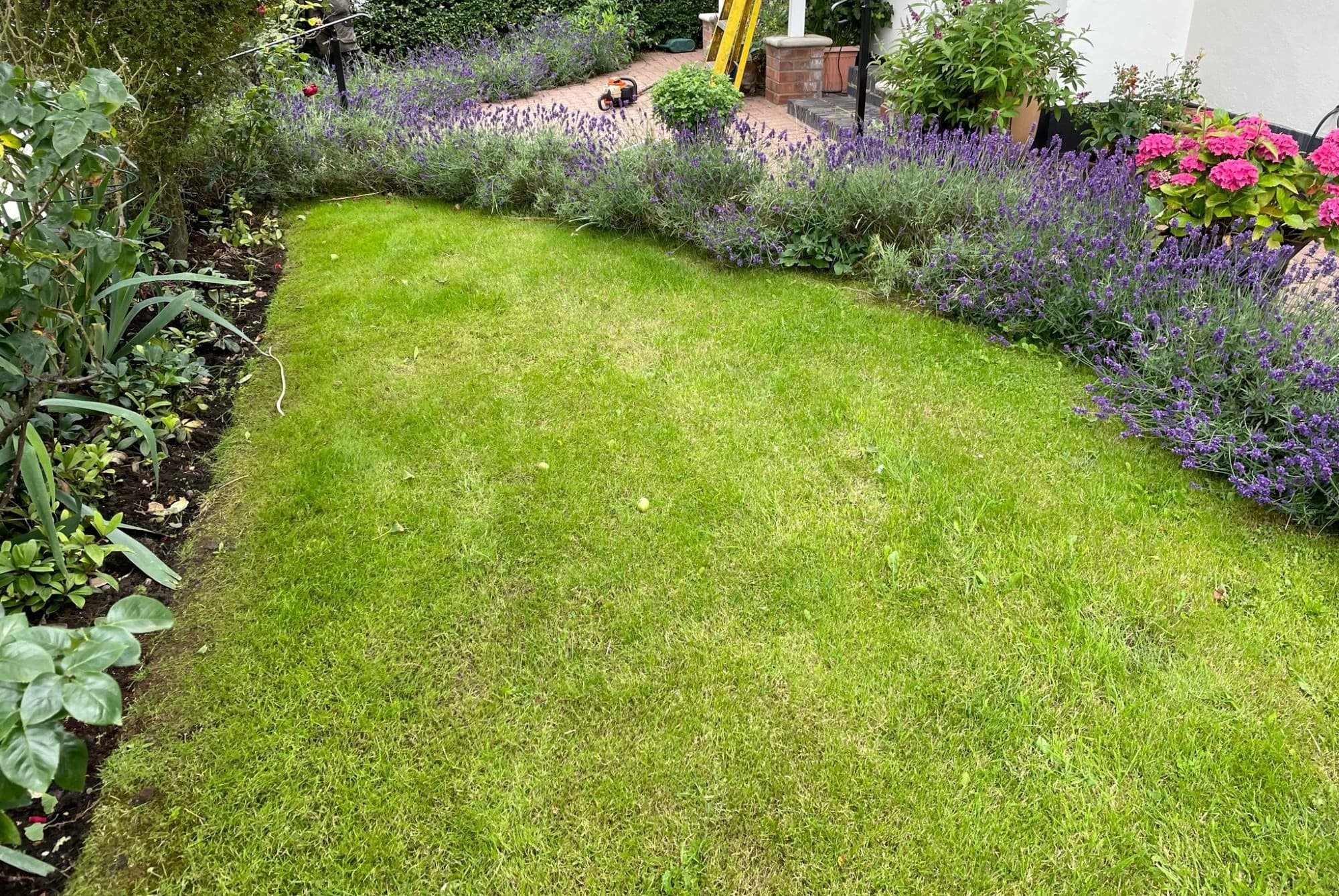
London summers are getting hotter and drier. These ten plants shrug off the heat, need little watering once established, and still earn their place all year.
London is drying out. The last few summers have brought hosepipe bans, cracked clay and lawns the colour of straw by July. It is tempting to read that as bad news for gardeners. It is not. It is simply an argument for planting things that were never going to mind. And, happily, a lot of the most beautiful garden plants are exactly those.
Drought-tolerant does not mean cactus-and-gravel. It means plants adapted to cope with dry spells once their roots are down: many of them Mediterranean, silver-leaved and covered in bees. Here are ten we plant again and again across North London, chosen to look good together and to carry the year, not just July.
The ten
- Lavender: the obvious one, and deservedly. Full sun, sharp drainage, cut it back and it will thrive on neglect.
- Salvia (nemorosa and the shrubby types): months of flower, adored by bees, unbothered by heat.
- Perovskia (Russian sage): a haze of blue-grey and violet in late summer when everything else is tiring.
- Euphorbia: architectural, evergreen structure and acid-green bracts in spring. Handle with care; the sap irritates.
- Stipa and Festuca grasses: movement, light and a long season for almost no water.
- Cistus (rock rose): evergreen, papery flowers, made for a hot, dry corner.
- Verbena bonariensis: tall, transparent, self-seeds gently and flowers until the frosts.
- Sedum (Hylotelephium): fleshy leaves that store water, flowers that carry pollinators into autumn.
- Phlomis: whorled yellow flowers and soft grey foliage; a tough, handsome shrub.
- Alliums and other bulbs: spring and early-summer punctuation that vanish underground before the dry months bite.
The secret is in the first summer
Here is the part people miss: “drought-tolerant” describes an established plant, not a new one. Every plant on that list needs watering through its first summer while it puts roots down. Neglect it in year one and it will not survive to be tough in year two. Water it well and deeply for those first few months and you can then, more or less, leave it alone.
Water deeply and rarely, not little and often. You are training roots to go down and find their own water. Reward them for it.
Give them sharp drainage
Most of these plants dislike sitting wet far more than they dislike being dry. On London clay, that means improving drainage: grit dug into the planting hole, a gravel mulch on the surface, raised beds where the ground is really heavy. A gravel garden is the classic setting for exactly this reason: it drains freely, reflects heat, and lets self-seeders roam.
A garden that gives back
There is a quiet dividend to planting this way. A dry, permeable garden uses less water, needs less of your time, and does more for wildlife: that list of plants is a bee and butterfly menu from spring to autumn. In a hotter, drier London, planting for drought is not a defensive move. It is simply better gardening.