Hard landscaping
Decking built properly, from the frame up.
A deck turns an awkward or sloping garden into somewhere you actually use. We build them on a solid, level frame, in hardwood, softwood or composite.
Get a quoteWhat’s included
Decking, in detail.
Every project is different, but here’s what this work typically involves.
Hardwood decking
Dense, durable boards that weather to a soft silver, or can be oiled to keep their colour. The longest-lasting timber option.
Softwood decking
Pressure-treated softwood is the most affordable route to a good deck, and lasts well when it is built and looked after properly.
Composite decking
Boards made from wood fibre and plastic: no staining or oiling, and a colour that holds for years.
Raised decks
Decks lifted to meet the back door or level out a sloping garden, built on a properly braced frame.
Steps
Generous, comfortable steps down to the lawn or between levels, built as part of the same frame.
Balustrades
Balustrades and handrails where a raised deck needs a safe, finished edge.
Decking guide
Planning a deck that lasts
A deck is only as good as the part you never see. Here is how we approach a build, using examples from decks we have built in Golders Green, Stratford and Bounds Green.
Start with how you will use it
Think about what the deck is for before you think about boards. A table and chairs for six needs more room than most people expect, and a deck that steps straight out of the back doors at the same level gets used far more than one you have to step down to. It is also worth watching where the sun falls in the evening, which is when most decks get used.
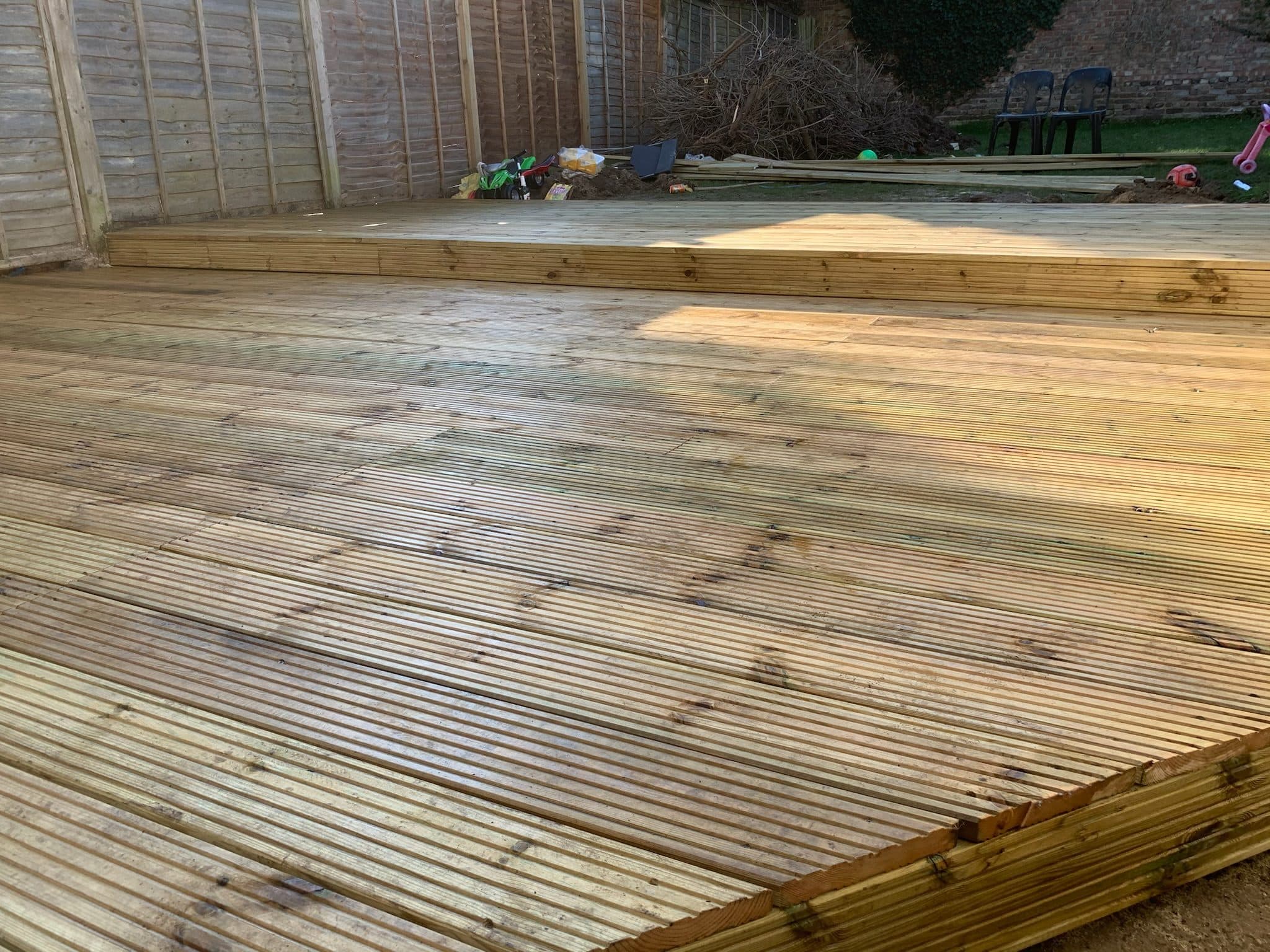
In Golders Green the brief was a proper outdoor room off the French doors, big enough for family life. That decided the size and the level before anything else.
See the Golders Green deckThe frame matters more than the boards
Every deck we build starts with groundwork: the site cleared and levelled and a weed membrane laid so nothing grows up through the boards. The frame goes on top, as a joist grid on adjustable feet or posts, set dead level.
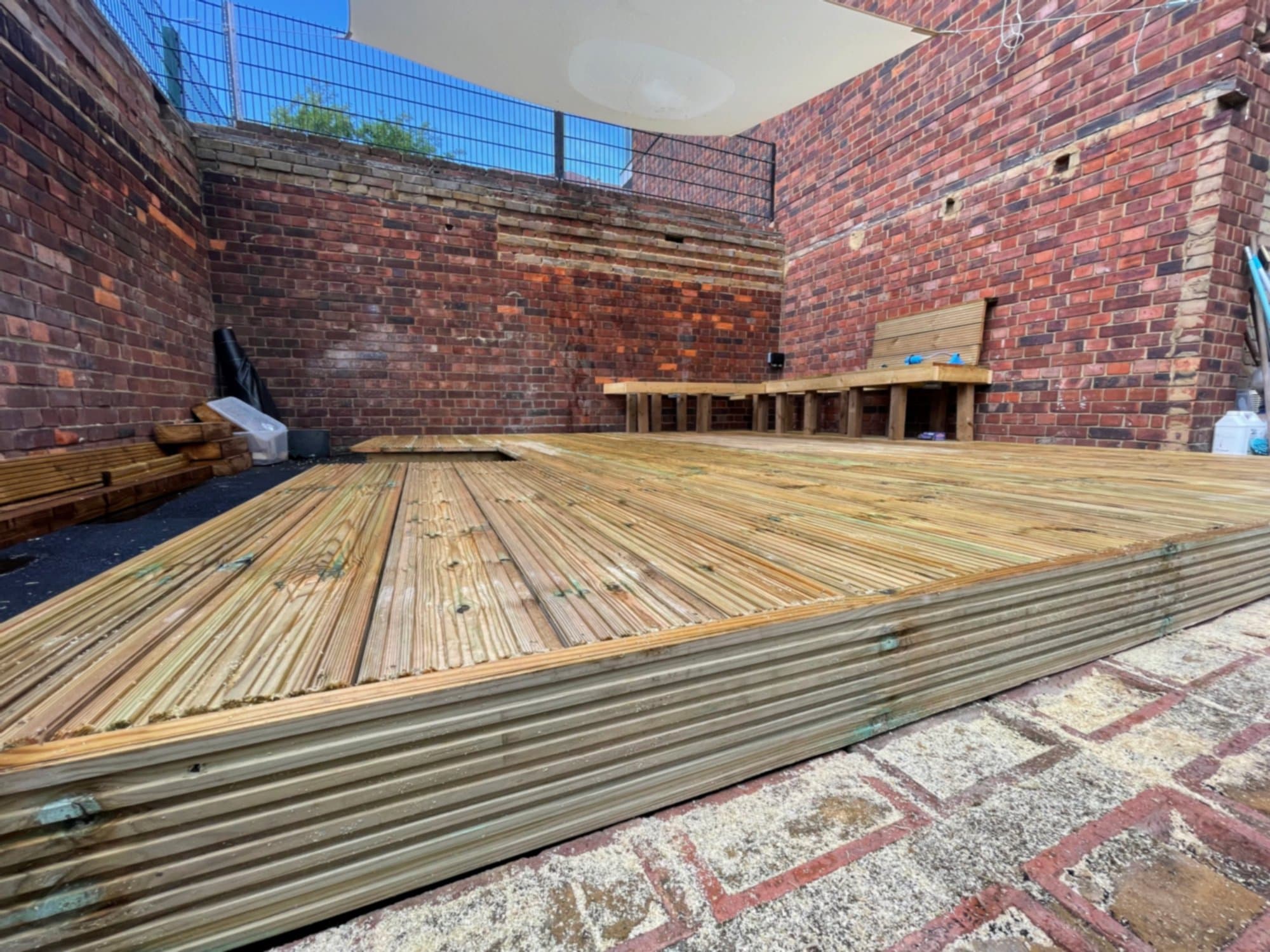
Adjustable feet are what let a deck sit perfectly flat over ground that is not. In Stratford and Golders Green both gardens were uneven, and the feet let us get a level surface across the whole area. On a narrowboat at Angel we used adjustable pedestals to level a hardwood deck over the curved steel roof.
See the Stratford deck buildHardwood, softwood or composite
Pressure-treated softwood is the most affordable way to a good deck and lasts well when it is built and looked after properly. Hardwood is denser and longer lasting, and weathers to a soft silver unless you oil it. Composite needs the least looking after and holds its colour, but it usually costs more.
In damp, shady London gardens any timber surface can turn slippery as algae builds up, so a deck in shade needs a regular clean. We will talk through which suits your garden and how much looking after you want to do.
Raised decks, steps and the rules
Most ground-level decks do not need planning permission. A deck raised more than 30cm above the ground usually does, and a raised deck can also overlook neighbours, which is worth thinking about early. Where a deck is raised, steps are built as part of the same frame, and balustrades go wherever a drop needs a safe edge.
Looking after a deck
Sweep it regularly, especially in autumn when leaves sit wet on the boards. Give it a proper clean in spring and autumn, oil hardwood once a year if you want to keep its colour, and check for any loose boards or fixings while you are at it.
How it works
From first conversation to finished garden.
- 01
Site visit
We look at levels, drainage and access, and talk through timber, size and how you want to use the space.
- 02
Groundwork
The site is cleared and levelled and a weed membrane goes down, so nothing grows up through the boards.
- 03
The frame
Joists on adjustable feet or posts, set dead level. It is the part you never see, and the part that decides how long the deck lasts.
- 04
Boards and finishing
Boards, steps, fascias and any balustrades fixed down with fixings that will not stain, then a thorough clean-down.
Recent projects
Where we’ve done this.
Golders Green
A pressure-treated softwood deck filling a Golders Green back garden, level over uneven ground and stepping straight out of the French doors.
See the projectStratford
A hardwood deck running wall to wall in Stratford, with a built-in raised bench along the back.
See the project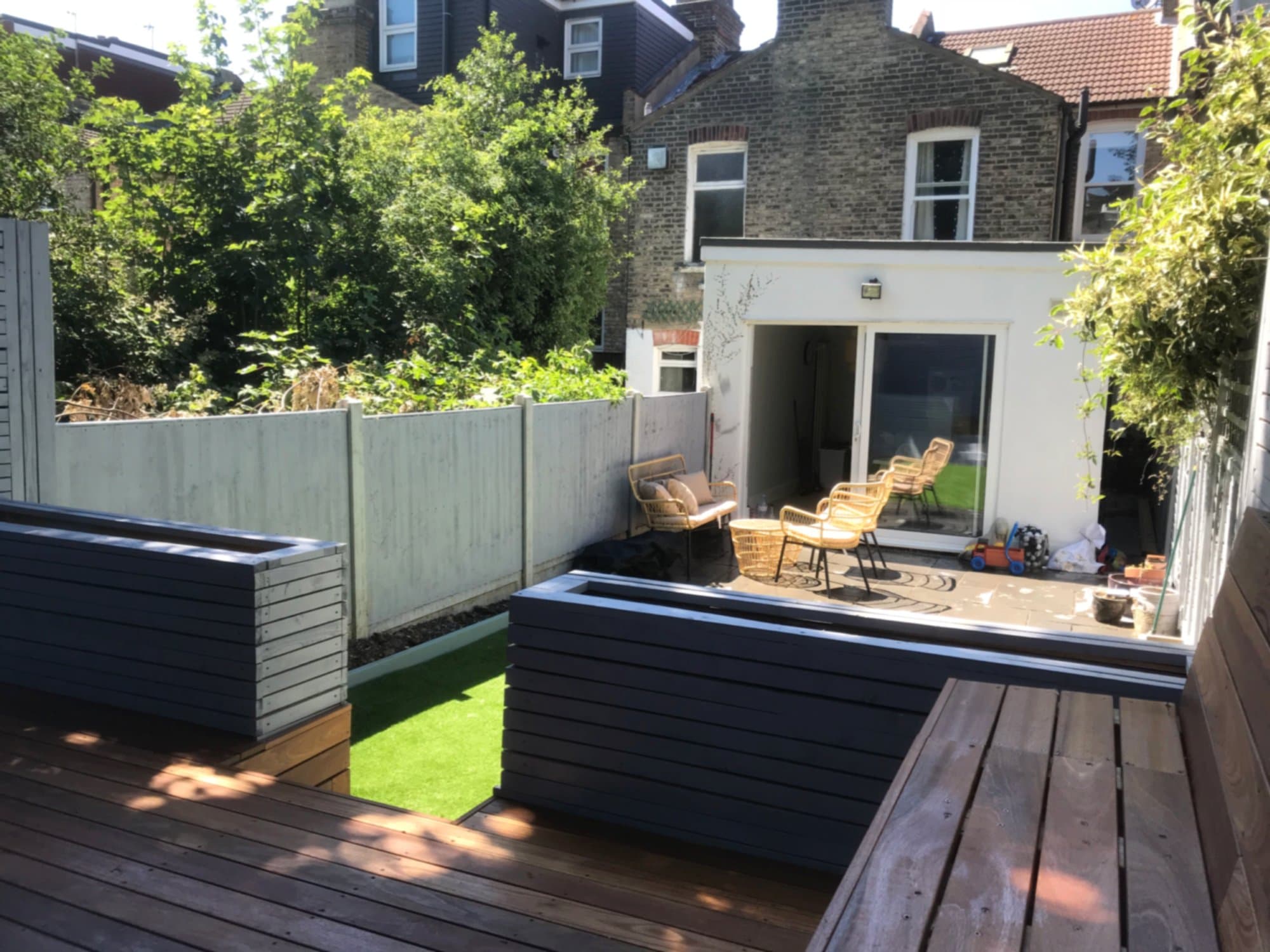
Bounds Green
Hardwood decking by the house in Bounds Green, alongside a built-in corner bench and new fencing.
See the project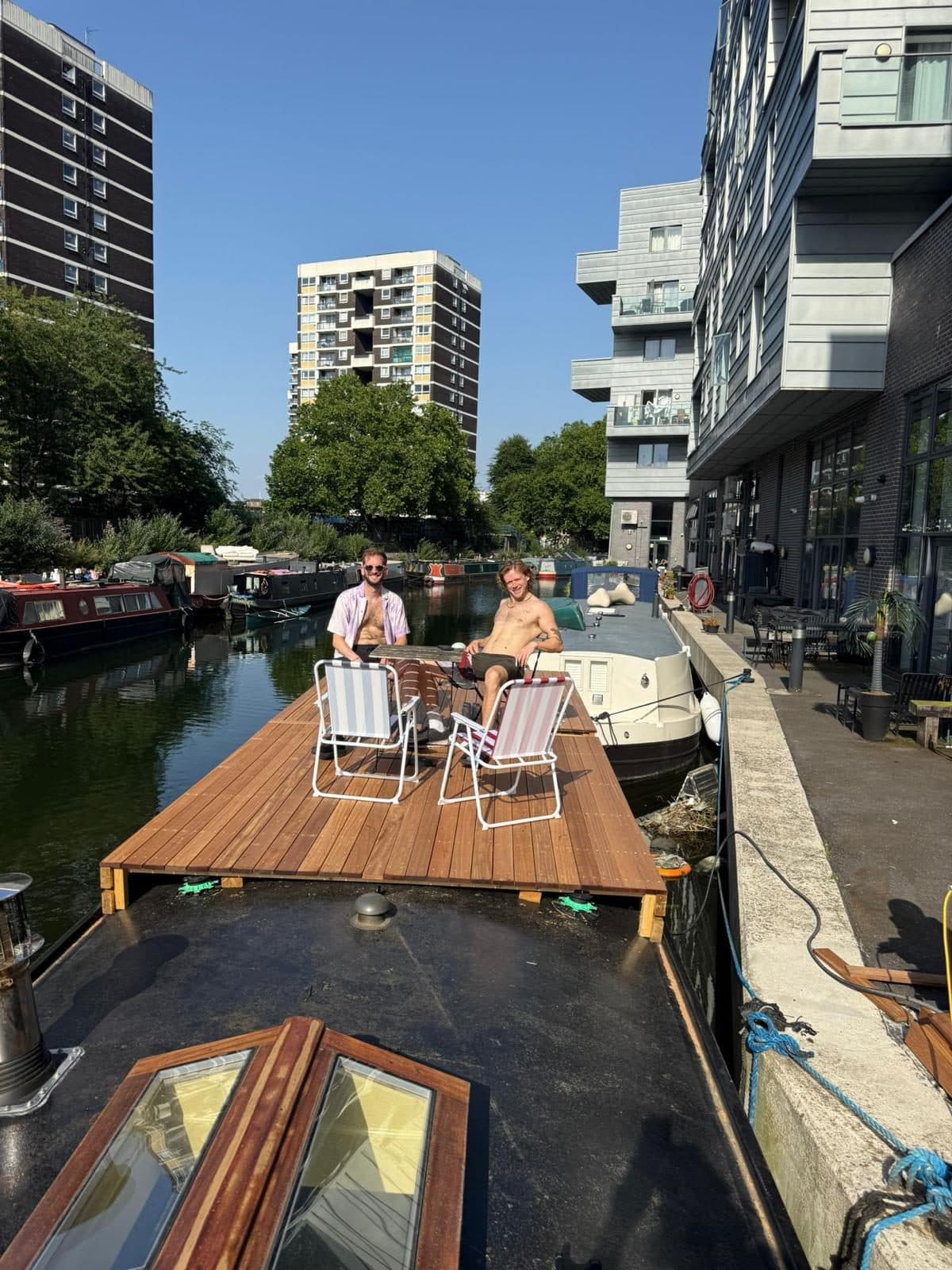
Angel
A hardwood roof deck on a narrowboat at Angel, levelled over the curved steel roof on adjustable pedestals.
See the projectPricing guide
From £3,500
Every deck is quoted after a site visit, once we have seen the levels, the access and the size you have in mind.
How much does decking cost? Read our price guideWhat affects the price
- Size of the deck
- Hardwood, softwood or composite boards
- Height off the ground, and whether steps or balustrades are needed
- Levels and ground conditions under the frame
- Access for materials, and anything that needs clearing first
Questions
Decking: the details people ask about.
Both make a good deck. Hardwood looks and feels like real timber, lasts a long time and weathers to a soft silver unless you oil it. Composite needs less looking after, with no staining or sanding, and holds its colour, but it usually costs more and can get hot underfoot in full sun. We will talk through both with you at the site visit.
It depends on the material and how it is looked after. As a rough guide, a well-built softwood deck lasts 10 to 15 years and hardwood 25 years or more, and composite boards often carry a long manufacturer’s warranty. In every case the frame underneath matters most, which is why we take the time to get it right.
Most ground-level decks do not. A deck raised more than 30cm above the ground usually does, as can a very large deck covering more than half the garden. Flats and listed buildings have extra rules too. If yours is likely to need permission, we will tell you at the site visit so you can check with your council before work starts.
Most of our deck builds take one to two weeks, from clearing the ground to the last board. Raised decks with steps and balustrades can take a little longer, and we will give you a realistic programme before we start.
Often, yes. If the patio is solid and drains, a frame on adjustable feet can sit over it. We check the surface and the drainage at the site visit.
Inspection chambers need to stay reachable, so we build a lift-out hatch into the deck over them.
Any timber can get slippery in shade and wet weather as algae builds up. Regular cleaning keeps it under control, and we will talk through the options for a shady spot.
Yes. We leave space for the trunk to grow and for water to reach the roots.
Explore more
Other services
Get in touch
Ready to talk about decking?
Tell us a little about your space and how you’d like to use it. We’ll come back to you within one working day.
info@pullingerlandscapes.co.uk