Hard landscaping
Fencing and fence repairs, done properly.
A good fence does its job quietly for years. We build new fences on concrete posts and gravel boards, hang gates, and repair the ones that have taken a battering.
Get a quoteFence repairs
No job too small.
We repair and replace storm-damaged panels, broken or rotten posts, gravel boards and gates, as well as building new fences.
What’s included
Fencing, in detail.
Every project is different, but here’s what this work typically involves.
Close-board and feather edge
Overlapping feather-edge boards fixed to strong rails: the classic solid, private boundary, and one that stands up well to wind.
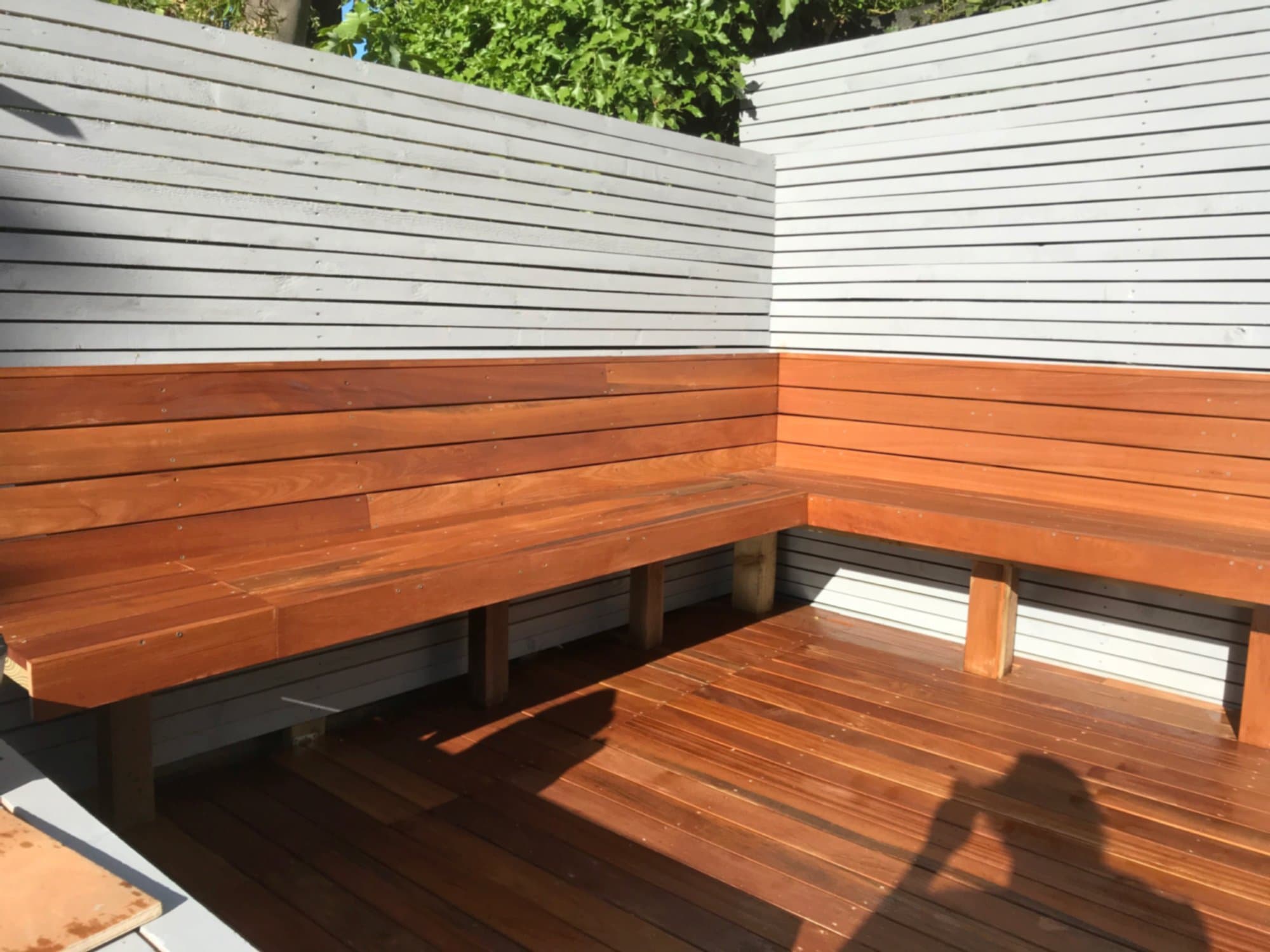
Slatted and horizontal
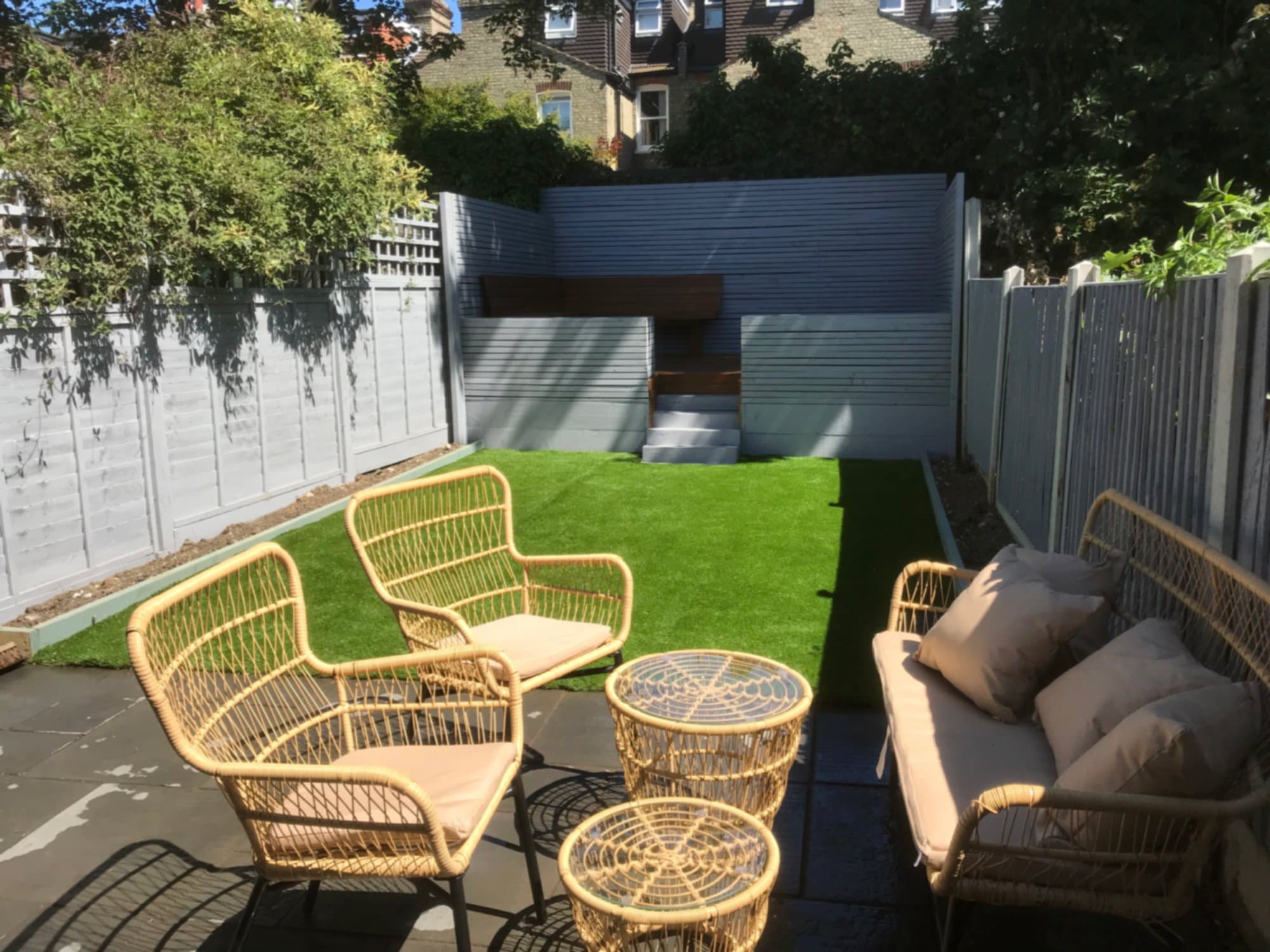
Horizontal boards with neat, even gaps for a clean, contemporary look. Painted or left natural, and a calm backdrop for planting.
Hit-and-miss
Boards fixed alternately either side of the rails, so the fence looks good from both gardens and lets the wind through rather than fighting it.
Gates
Side and garden gates hung to match the fence, with proper hinges and latches so they close cleanly for years.
Concrete posts and gravel boards
Concrete posts do not rot, and a gravel board along the bottom keeps the timber off the soil. Between them they add years to a fence.
Old fence taken away
We remove the old fence and take it away, so you are left with the new one and nothing to deal with.
Storm damage
Storm-damaged fence?
Often it just needs a quick repair: a blown-out panel or a snapped post replaced to match the rest of the fence. If the fence is past saving, we take the old one away and replace it properly, on concrete posts and gravel boards so it stands up to the next storm. We’ll tell you honestly which makes more sense.
Fencing guide
Choosing and building a fence for a London garden
Most of the fences we are asked to look at have failed for the same few reasons. Here is what we think about before a single post goes in, and what you might want to think about too.
Which fence suits your garden
Close-board and feather-edge fencing gives the most privacy and is the classic choice for a back garden boundary. Slatted and horizontal fencing looks cleaner and more contemporary, and makes a calm backdrop for planting. Hit-and-miss is a good answer for exposed, windy gardens, because the wind passes through it rather than pushing against a solid face.
It is also worth thinking about light. A tall solid fence on the south side of a narrow garden can shade a border for much of the day, where a slatted fence lets a little more through. Most back garden fences are around 1.8 metres high. Up to 2 metres usually does not need planning permission, but the limit is 1 metre next to a road.
Why fences fail, and how we build ours to last
Most fences fail at ground level. Timber posts rot where they meet damp soil, and on London clay the ground stays wet through winter and shrinks in dry summers, which works posts loose over time. A solid panel then acts like a sail in a storm, and a weak post gives way.
That is why we build new fences on concrete posts, which do not rot, with a gravel board along the bottom to keep the timber off the soil. Posts are set in concrete, level and in line. It is the part you stop noticing once the fence is up, and the part that decides whether it is still standing in ten years.
Repair or replace?
If the posts are solid, a blown-out panel or a broken gravel board is usually a quick repair, matched as closely as possible to the rest of the fence. If several posts rock when you push them, have rotted at the base, or the fence leans along its length, replacing it properly usually makes more sense than patching it again. We will tell you honestly which it is.
Read our guide to repair or replace after storm damageBoundaries and neighbours
Before any work starts, it helps to know whose fence it is. Your title plan sometimes shows which boundaries are yours to maintain, often with a “T” mark on your side of the line. If nothing is recorded, agree it with your neighbour first. Facing the smooth side towards next door is a common courtesy rather than a legal rule.
We are always happy to talk it through with both of you on site, so everyone knows what is happening and when.
Getting materials in
Many North London terraces have no side access, so posts, concrete and timber come through the house. We plan for that at the site visit, agree the route with you, and keep everything tidy at the end of each day.
Looking after your fence
Keep soil, leaves and climbing plants off the boards, because damp held against timber is what rots it. Treat timber every few years if you want to keep its colour, and have a quick look along the fence after a big storm, when a loose board is still a small job.
How it works
From first conversation to finished garden.
- 01
Site visit
We look at the run, the ground and the boundary, talk through styles and heights, and measure up.
- 02
Clear quote
A clear price for the materials, the labour and taking the old fence away, with no surprises later.
- 03
Old fence out, posts in
The old fence comes down and the new posts are set in concrete, level and in line.
- 04
Boards, gates and tidy
Panels or boards, gravel boards and gates go up, and we clear the site before we leave.
Recent projects
Where we’ve done this.
Pricing guide
New fences from £1,200
Repairs and panel replacements: quoted individually.
Every new fence is quoted after a site visit, once we have measured the run and seen the ground and the access.
How much does a new fence cost? Read our price guideWhat affects the price
- Length and height of the run
- Style of fence (close-board, slatted or hit-and-miss)
- Concrete or timber posts, and gravel boards
- Taking away the old fence
- Access, and anything growing along the boundary
- Gates, and the hinges and latches they need
Questions
Fencing: the details people ask about.
Yes. We repair panels, posts, gravel boards and gates, and we’ll tell you honestly whether a repair or a replacement makes more sense.
It depends on your property. Your deeds or title plan sometimes show which boundaries are yours to look after, often with a “T” mark on your side of the line. If nothing is recorded, agree it with your neighbour before any work starts. We are happy to talk it through with both of you on site.
Most fence runs take 1 to 3 days, including taking the old fence away. Longer runs, gates or tricky access can add a little time, and we will tell you before we start.
Usually not. A garden fence up to 2 metres high does not normally need permission, but the limit is 1 metre where the fence is next to a road. Listed buildings and some conservation areas have extra rules, so if either applies, it is worth checking with your council first.
Yes. We remove the old fence and take it away as part of the job.
There is no legal rule. By convention the smooth side often faces the neighbour, but what matters most is that you and your neighbour agree, and that the fence sits on the right side of the boundary.
For repairs we match the boards or panels as closely as we can. New timber looks a little lighter at first and weathers in over the following months.
We work around established planting where we can and talk you through anything that needs cutting back or moving before we start.
Yes. We can add a side or garden gate to an existing run, hung on proper posts so it closes cleanly.
Explore more
Other services
Get in touch
Ready to talk about fencing?
Tell us a little about your space and how you’d like to use it. We’ll come back to you within one working day.
info@pullingerlandscapes.co.uk