Sustainable
A good garden gives more than it takes.
A garden can cool a street, soak up a downpour and feed a hundred pollinators. We build gardens that look after themselves, and the patch of London they sit in, a little better.
What’s included
Sustainable Gardens, in detail.
Every project is different, but here’s what this work typically involves.
Wildlife-friendly features
Log piles, insect hotels, hedgehog highways between gardens, nectar-rich pollinator planting and a small pond where there is room, the quiet details that turn a tidy garden into a busy, living one.
Native & pollinator planting
Schemes rich in native and nectar plants that feed bees, butterflies and birds through the year.
Meadow gardens
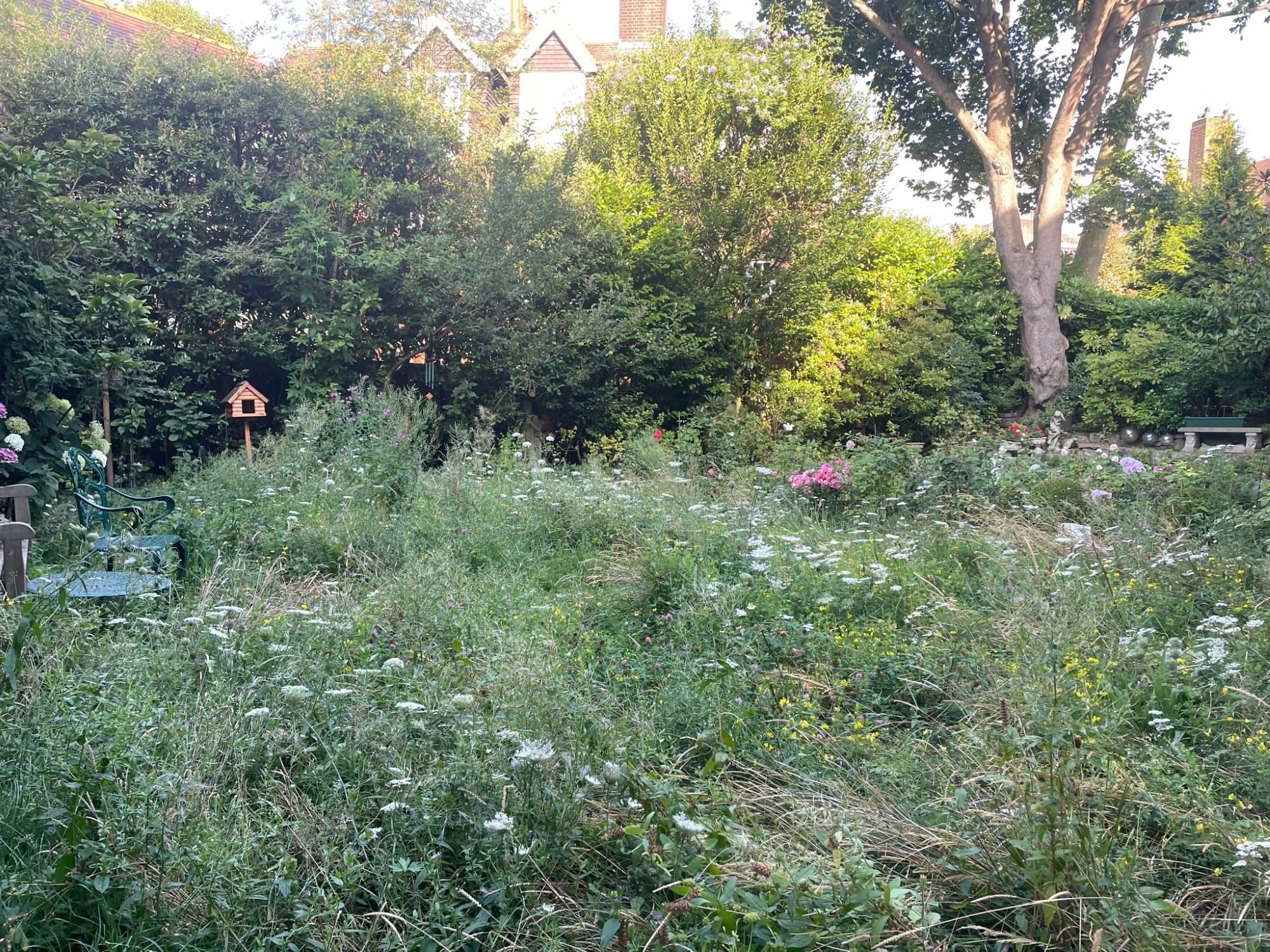
Wildflower and grass meadows cut once or twice a year rather than weekly, alive with pollinators through the summer and a genuine low-input alternative to lawn where it suits.
Rainwater & irrigation
Water butts, rain gardens and efficient drip irrigation so the garden makes the most of what falls on it.
Healthy soil
Peat-free composts, home-made leaf mould and mulching that build living soil rather than depleting it.
Low-maintenance by design
Right plant, right place: schemes that need less feeding, watering and fuss because they are suited to the conditions.
How it works
From first conversation to finished garden.
- 01
Understand the site
We look at how water moves, where the sun falls and what already grows, and work with the grain of the place.
- 02
Plan low-impact
Meadow gardens, wildlife-friendly features and resilient native planting worked into the concept from the outset, keeping rainwater on site and building healthy soil.
- 03
Build responsibly
Waste sorted and recycled, materials sourced locally where we can, disruption kept low.
- 04
Support the ecosystem
Habitat features and a planting scheme designed to grow richer, not thinner, over time.
Recent examples
Where we’ve done this.
Barnet, EN5
A wildlife-friendly garden in Barnet
A family garden replanted with native hedging, log piles and a small pond, alive with birds and insects.
Southgate, N14
A rain garden in Southgate
A poorly draining garden turned into a rain garden that holds and filters storm water.
Mill Hill, NW7
A meadow and pollinator garden in Mill Hill
A native scheme with a wildflower lawn, nectar-rich perennials and mixed native hedging.
Pricing guide
From £4,500
Sustainable garden projects start around £4,500 for a native planting scheme or meadow lawn. Larger builds with wildlife features, ponds, and reclaimed materials are quoted per project.
What affects the price
- Size of the meadow, wildlife area, or sustainable planting
- Ground preparation (native meadow needs poor soil, so ground may need adjusting)
- Type of meadow turf (species blend, hardwearing wildflower, etc.)
- Whether wildlife features (log piles, ponds, hedgehog houses) are included
- Existing garden condition and how much clearance is needed first
Questions
Sustainable Gardens: the details people ask about.
Only if you want it to. Sustainability is mostly about how a garden is built and how it works: healthy soil, the right plant in the right place, water kept on site rather than run off it. Even a meadow reads as deliberate when it is framed by a mown edge and a clipped hedge.
Explore more
Other services
Get in touch
Ready to talk about sustainable gardens?
Tell us a little about your space and how you’d like to use it. We’ll come back to you within one working day.
info@pullingerlandscapes.co.uk