Planting & soft landscaping
Turfing and new lawns, done properly.
A good lawn starts underneath. We strip out the old one, prepare the ground properly and lay quality turf, whether you want a classic lawn, a wildflower meadow or an artificial lawn.
Get a quoteWhat’s included
Turfing, in detail.
Every project is different, but here’s what this work typically involves.
New lawns from scratch
The old lawn or weeds stripped out, the ground dug over and fresh topsoil added, then levelled and firmed so the new lawn starts on a proper base.
Quality turf, laid tight
Good-quality turf laid with tight joints, rolled so every piece sits firmly on the soil, then watered in.
Wildflower and meadow turf
Pre-grown wildflower turf that gives you a meadow straight away, full of flowers for pollinators and cut only once or twice a year.
Artificial lawns
Artificial lawns laid on a properly prepared, drained base, for shady corners, roof terraces and hard-working family gardens where real grass struggles.
More about artificial grassOld lawn taken away
We strip out the old lawn and any weeds and take them away, so the new lawn goes down on clean ground.
Aftercare advice
Clear advice on watering and the first cut, so your new lawn gets the best possible start.
Timing
Now is a good time to plan a new lawn.
Autumn and spring are the best times to lay turf. The ground is warm and moist, so the roots take quickly and the new lawn needs less watering to get going. Get in touch now and we can book you in for the next good window.
Lawn guide
Getting a new lawn right
A lawn that struggles is almost always struggling because of what is underneath it. Here is how we approach a new lawn, with examples from lawns we have laid and restored in Muswell Hill, Belsize Park and Hampstead.
Why preparation matters
Patchy lawns usually come down to compacted ground, poor soil, or bumps and dips that never get levelled out. For a new lawn we strip out the old grass and weeds, dig the ground over, add fresh topsoil, then level and firm it so the turf goes down on a proper base.
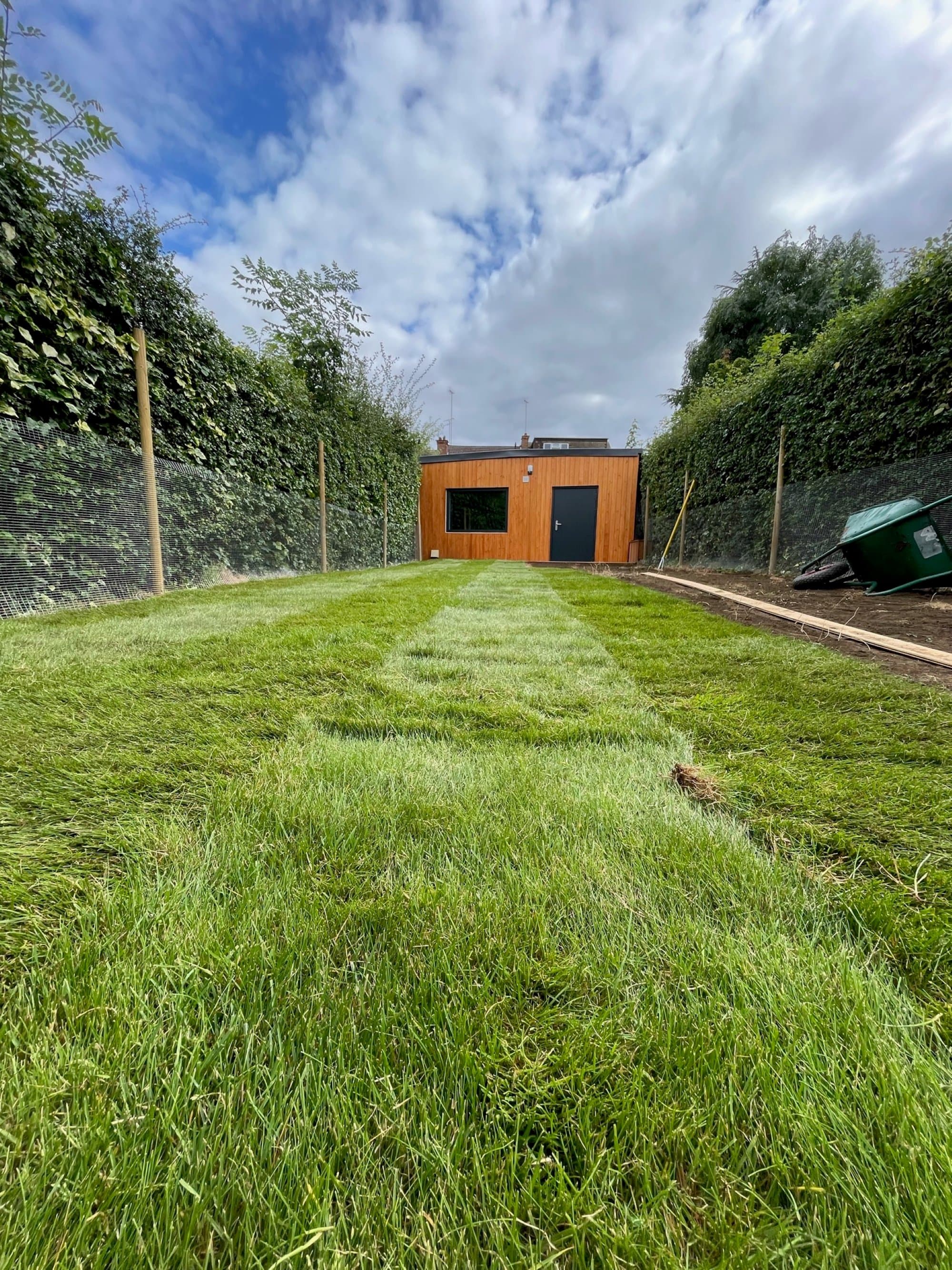
In Muswell Hill we turfed the full length of a back garden in a single day, but most of the work that makes a lawn last happens before the first roll goes down.
See the Muswell Hill lawnNew turf or restoring the lawn you have
Not every tired lawn needs replacing. In an established Belsize Park garden we brought a thin, mossy lawn back to full green without stripping it out: aeration and scarification to lift the moss and thatch, then levelling, fresh topsoil and re-seeding with a blend chosen for the light, followed by careful watering and feeding while it knitted together.
Restoration takes longer, but in a mature garden the result blends in rather than sitting on top like a patch. New turf is the quicker route when the old lawn is beyond saving or you want it usable sooner.
See the Belsize Park lawn restorationShade, clay and heavy use
London clay drains slowly and compacts easily, and many North London gardens have big trees and tall boundaries that shade part of the lawn. Both are worth knowing about before you choose turf. Where grass is always going to struggle, such as deep shade or a hard-working family garden, an artificial lawn can be the better answer, and we will tell you honestly if we think so.
More about artificial grassWildflower meadow turf
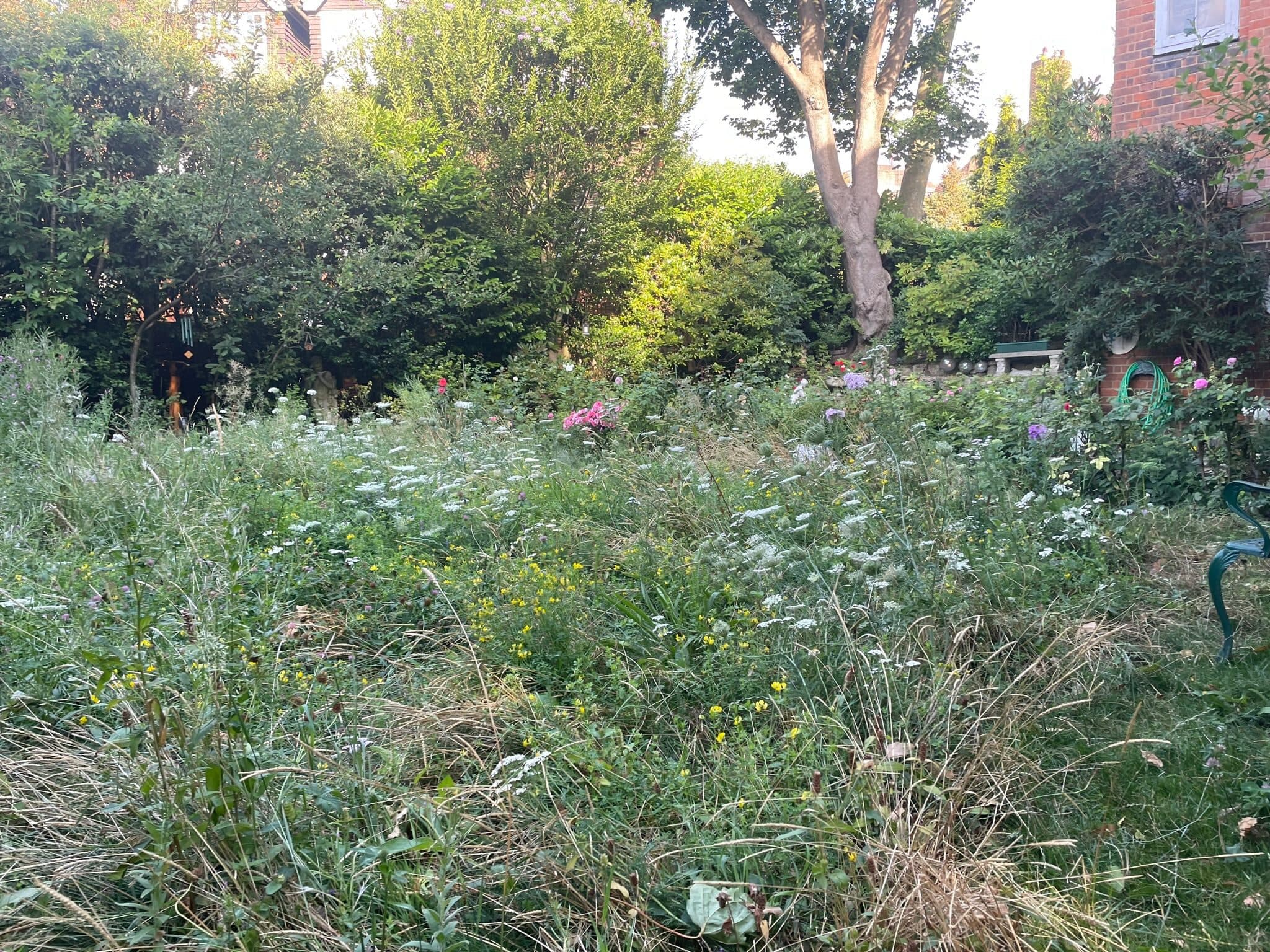
Meadow turf gives you a wildflower lawn straight away, full of flowers for pollinators and cut only once or twice a year. In Hampstead we laid meadow turf across a garden in three days, and it is now in full bloom. It is best for areas you enjoy looking at rather than ones you play football on.
See the Hampstead wildflower meadowThe first few weeks
Water a new lawn every day in dry weather for the first couple of weeks, and keep off it for two to three weeks while the roots take. Give it its first cut on a high setting once it has rooted. We talk you through all of it when we finish.
How it works
From first conversation to finished garden.
- 01
Site visit
We look at the area, the soil and the light, talk through real, meadow or artificial turf, and measure up.
- 02
Strip and prepare
The old lawn or weeds are stripped out, the ground is dug over and fresh topsoil goes in.
- 03
Level and firm
The soil is levelled and firmed so the finished lawn sits flat, with no dips or soft spots.
- 04
Lay, roll and water in
The turf is laid tight, rolled and watered in, and we clear up before we leave.
Recent projects
Where we’ve done this.
Hampstead
Wildflower meadow turf laid across a Hampstead garden in three days, now in full bloom.
See the project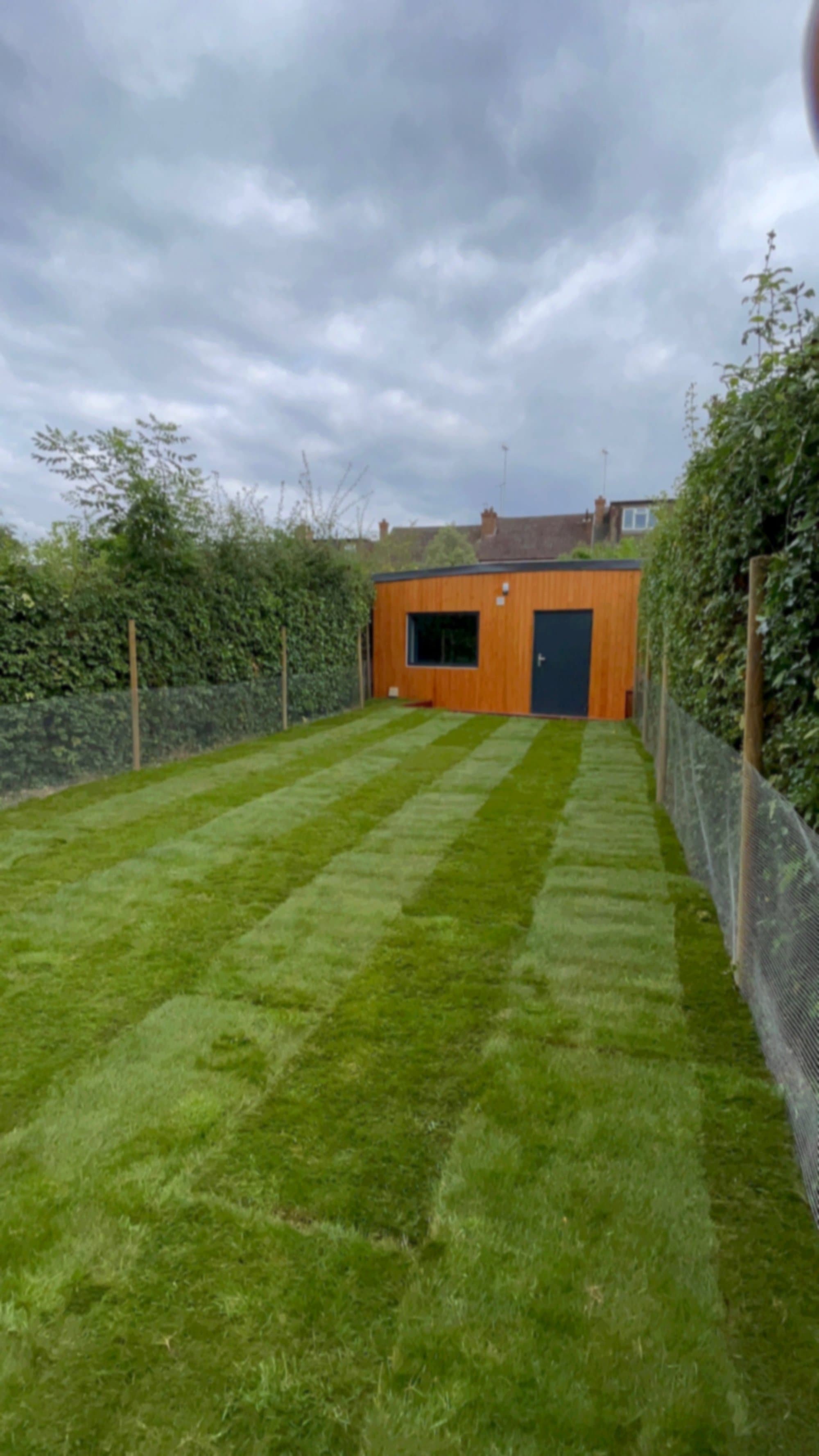
Muswell Hill
Fresh turf laid the full length of a Muswell Hill back garden in a single day.
See the project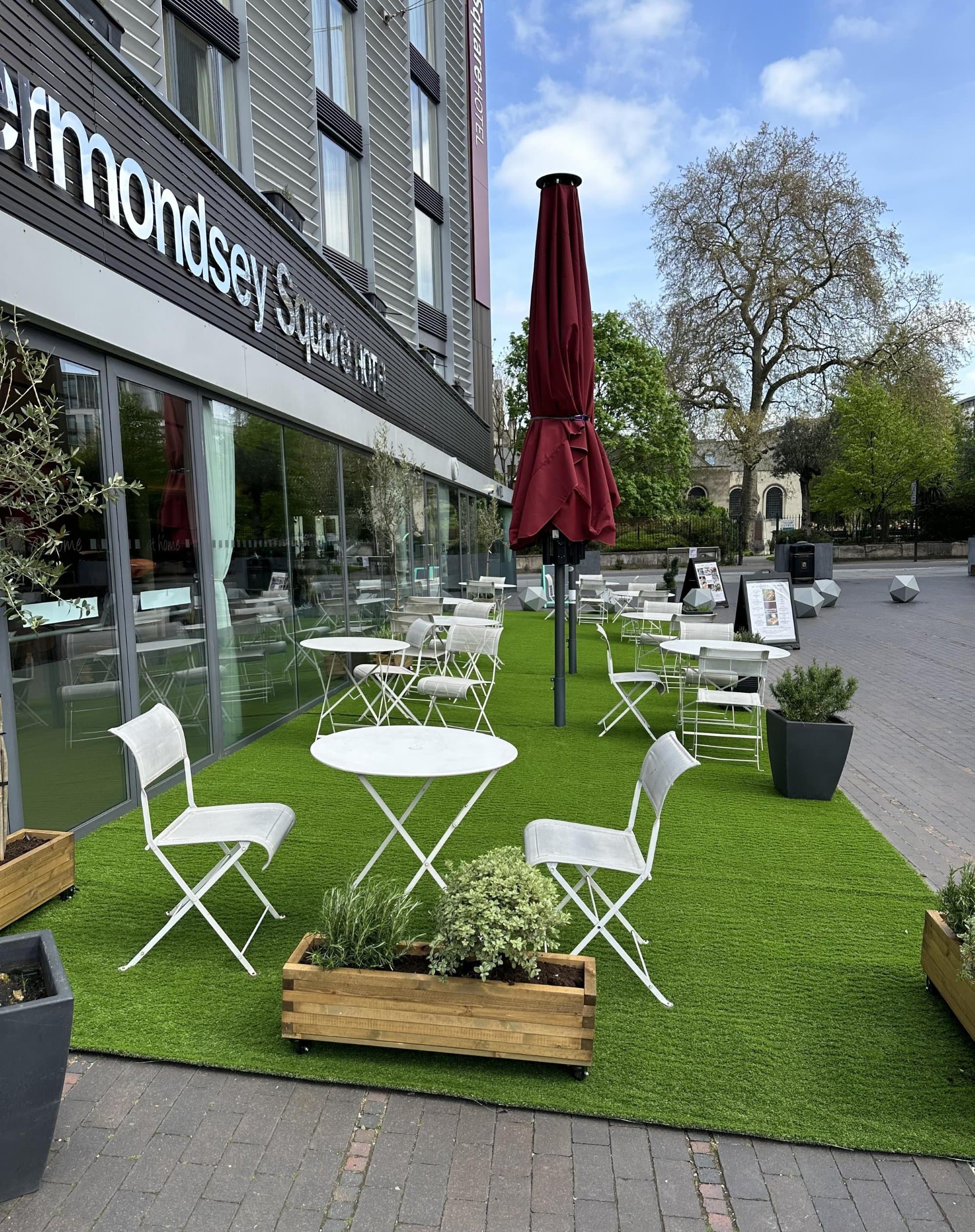
Bermondsey
Artificial lawn laid on a hotel terrace and along its street frontage in Bermondsey.
See the project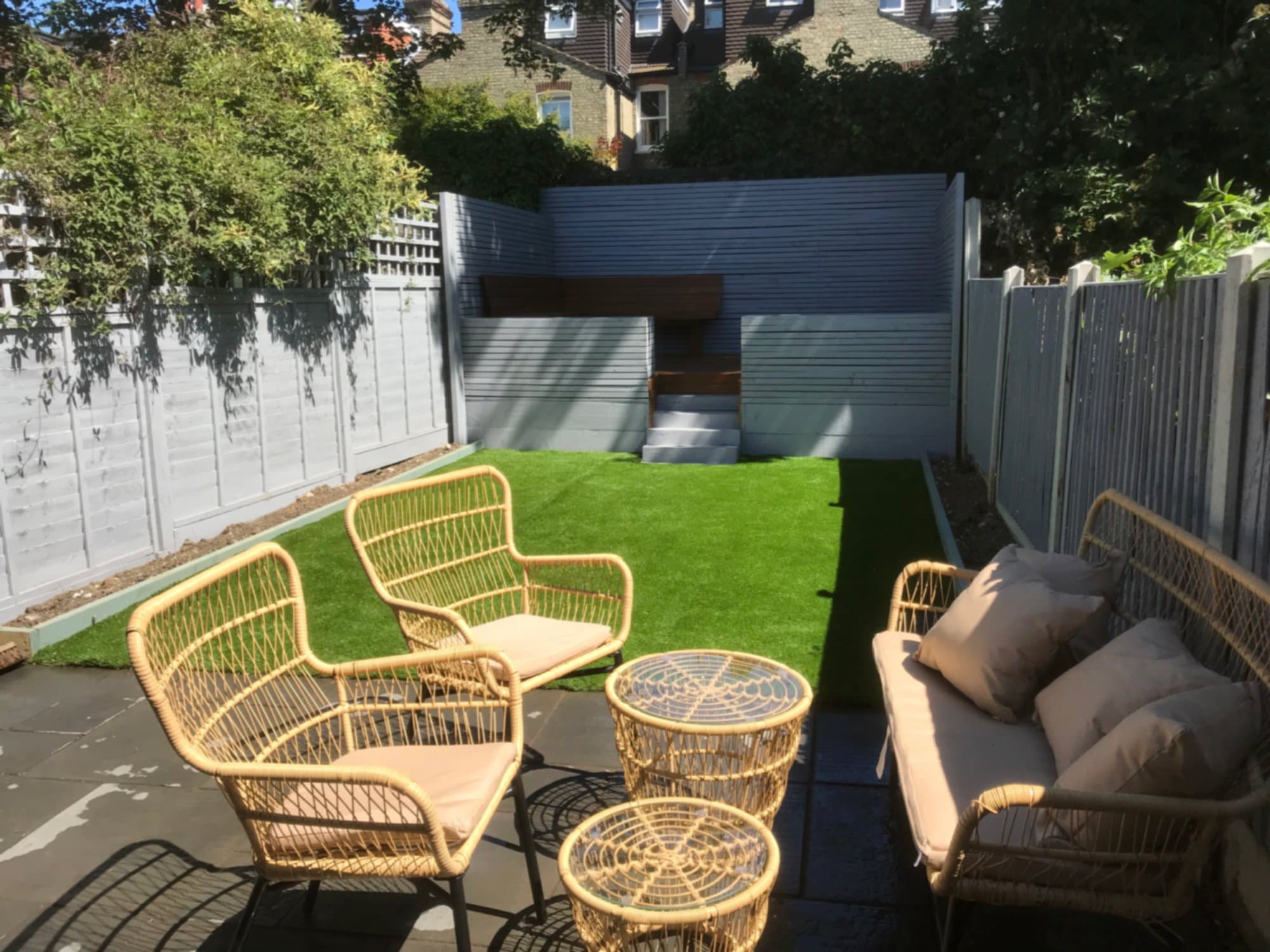
Bounds Green
An artificial lawn at the heart of a reworked Bounds Green garden.
See the projectPricing guide
Turfing from £800
Every lawn is quoted after a site visit.
What affects the price
- Size of the lawn
- Real, meadow or artificial turf
- How much stripping, digging and topsoil the ground needs
- Levels and drainage
- Access for turf and topsoil, and taking the old lawn away
Questions
Turfing: the details people ask about.
Autumn and spring are ideal, when the ground is warm and moist and the roots take quickly. Turf can be laid for most of the year, just not when the ground is frozen or during a drought.
Keep off it for two to three weeks while the roots take. Light use is fine after that, and normal use once it is established.
Water it every day in dry weather for the first couple of weeks. Once it has rooted, give it its first cut on a high setting. We will talk you through it when we finish.
Real turf is cheaper to lay and better for wildlife, but it needs mowing and care, including watering in dry spells. Artificial needs very little upkeep and suits shady corners, roof terraces and heavily used spaces where real grass struggles. We will tell you honestly which suits your garden.
Yes. We strip out the old lawn and take it away as part of the job.
Most lawns take one to three days. A full-length back garden in Muswell Hill was turfed in a day, and a wildflower meadow lawn in Hampstead took three. Artificial lawns range from a day for a small area to around a week for a large terrace. We confirm the timing with your quote.
Gaps usually mean the turf has dried out before it rooted, and the pieces have shrunk. Water it well, and the gaps normally close as it establishes.
Yes, as long as the ground is not frozen or waterlogged. It roots more slowly in the cold, so it needs a little more patience before it is used.
Yes. Levelling out bumps and dips is part of preparing the ground. A properly sloping garden is a bigger job, and we will talk through the options at the site visit.
If the lawn is thin but the ground is sound, restoring it with soil work and re-seeding can work well. If it is mostly weeds, badly uneven or you want to use it soon, new turf is usually the better choice.
Explore more
Other services
Get in touch
Ready to talk about turfing?
Tell us a little about your space and how you’d like to use it. We’ll come back to you within one working day.
info@pullingerlandscapes.co.uk