Our new fences start from £1,200, and repairs are priced on their own. Here is what decides the price of a fence in a London garden, and how to get one that lasts.
It is the first question almost everyone asks, and the honest answer is that it depends on the fence. It does not have to be a mystery, though. Here is what we charge, what pushes the price up or down, and what to look for in a quote.
The short answer
Our new fences start from £1,200, with the old fence taken away. Longer runs, taller fences, gates and more involved designs cost more. Every new fence is quoted after a free site visit, once we have measured the run and seen the ground and the access.
Repairs are priced on their own. If the posts are sound, replacing a blown-out panel, a snapped post or a rotten gravel board is a much smaller job than a new fence.
What decides the price
- Length and height. The longer and taller the run, the more posts, boards and time it takes. Most back garden fences are around 1.8 metres high.
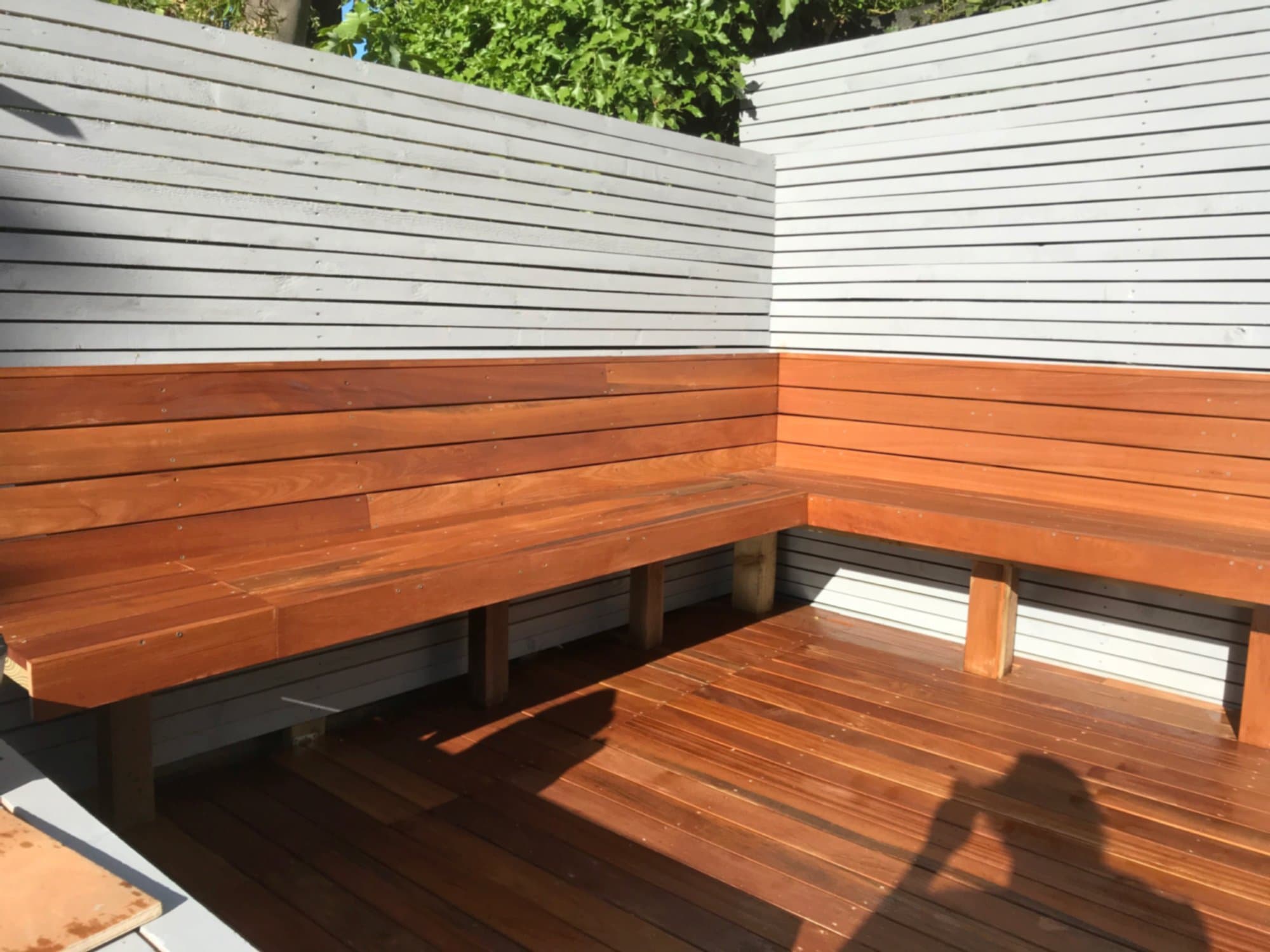
- Style. Close-board and feather-edge fencing is the classic solid boundary. Slatted and hit-and-miss designs use more timber and take longer to build, so they usually cost more.
- Posts and gravel boards. We build new fences on concrete posts, which do not rot, with a gravel board along the bottom to keep the timber off the soil. It is the part we will not cut corners on, because it decides whether the fence is still standing in ten years.
- Taking the old fence away. Removing the old fence and taking it away is part of the job, and it is in our quote.
- Access. Many North London terraces have no side access, so posts, concrete and timber come through the house. That takes longer, and we plan for it at the site visit.
- What is along the boundary. Overgrown shrubs, ivy, tree roots or old concrete footings all take time to deal with before new posts can go in.
- Gates. A gate needs strong posts, proper hinges and a latch, so it adds to the price.
Repair or replace?
If the posts are solid, a repair is nearly always the cheaper option, and we are happy to do it. If several posts rock when you push them, have rotted at the base, or the fence leans along its length, replacing it properly is better value than patching it again every winter. Our guide to storm-damaged fences explains how to tell the difference.
Why the cheapest quote can cost more
Most fences fail at ground level. Timber posts rot where they meet damp London clay, and a solid panel acts like a sail in a storm. A fence put up quickly on timber posts with no gravel boards can look just like a well-built one on the first day, and fail years sooner.
When you compare quotes, ask what posts are being used, whether there are gravel boards, and whether taking the old fence away is included.
Sharing the cost with a neighbour
If the fence is on a shared boundary, talk to your neighbour before you get quotes. Plenty of neighbours split the cost of a new fence that benefits both gardens. Your title plan sometimes shows who is responsible for which boundary, often with a “T” mark on one side of the line.
How long does it take?
Most fence runs take one to three days, including taking the old fence away. Longer runs, gates or tricky access can add a little time, and we will tell you before we start.
What a good quote includes
- The length and height of the fence, and the style
- The type of posts, and whether there are gravel boards
- Any gates, with their hinges and latches
- Taking away the old fence
- Clearing up when the job is done
Our quotes give a clear price for the materials, the labour and taking the old fence away, with no surprises later. You can see the styles we build on our Fencing page.
Get a price for your fence
The quickest way to an exact price is a site visit. We will measure up, look at the posts, the ground and the access, and send you a clear written quote. The visit and the quote are free, with no obligation, and no fence job is too small.